
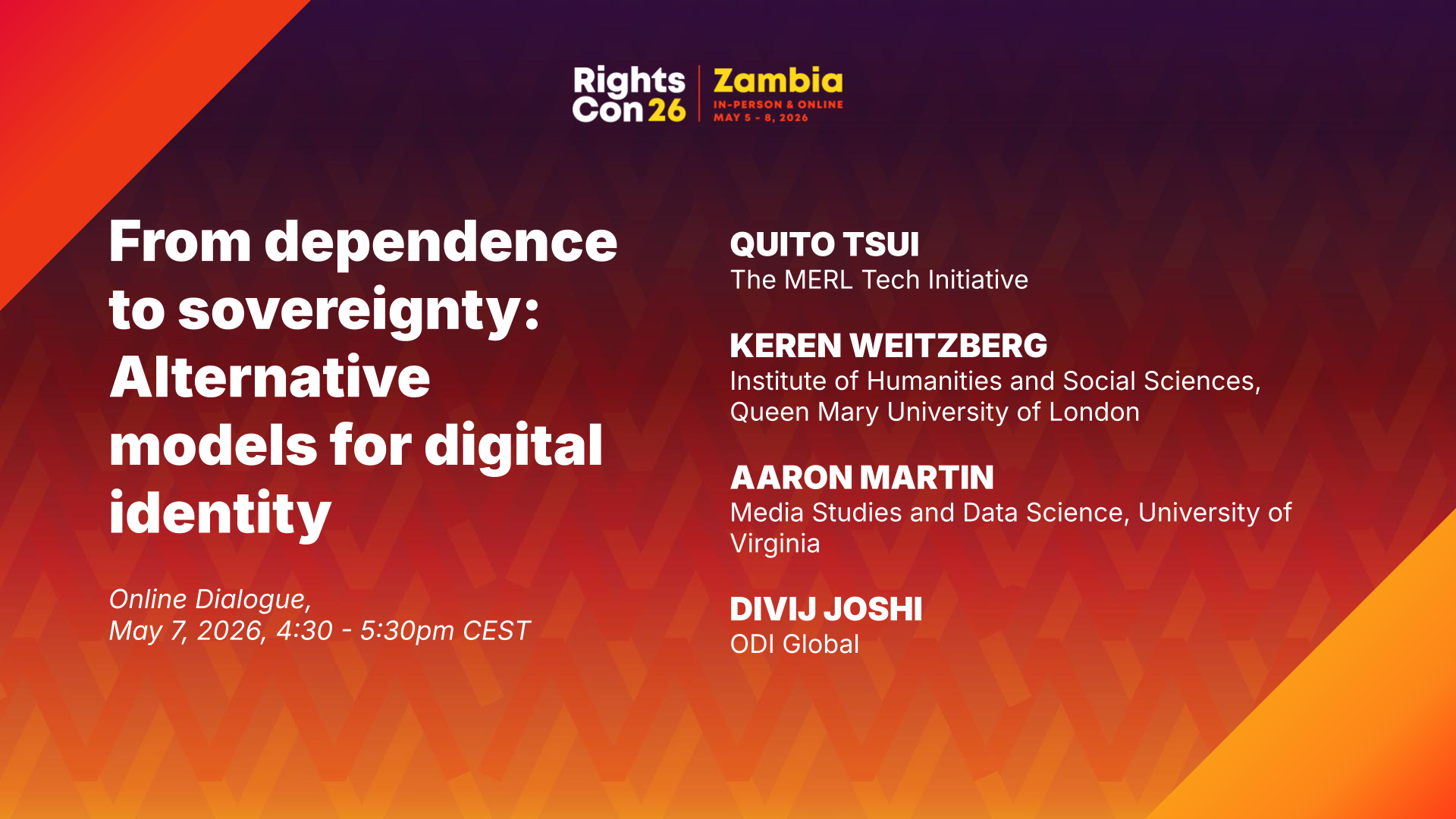
May 07: From dependence to sovereignty: Alternative models for digital identity at RightsCon
Digital identity systems first gained traction as part of a development narrative. Aligned with the SDGs and the push for a legal identity for all, governments and philanthropic funders encouraged uptake and supported technology transfer. The reliance, however, of predominantly Global South countries on Global North providers for such a critical anchor of civic architecture has raised questions around what sovereignty means in the face of digital identity deployment. This session asks how shifts in both the funding landscape and technological possibilities of digital identity have led to concerted interest in the implications of digital identity for digital sovereignty. Alternative models of digital identity development are emerging: MOSIP from India and NADRA from Pakistan beckon other possibilities. Regardless, for most countries, their decision-making is constrained by funding and technological capacity, meaning that choice is limited for the ultimate digitised expression of state power. Equally, as tools of centralisation and oversight, digital identity systems continue to be plagued by questions of access and inclusion.
Together with those at the forefront of design, implementation, and critical reflection, we will consider what new models of digital identity systems may look like, and outline the kind of data protection frameworks and enforcement authorities necessary in countries developing digital identity systems. The centrality of such systems requires both a national and international perspective to situate the true ramifications of digital identity systems for majority world countries. We intend to complicate narratives of technocolonialism and consider the kind of power that such digital identity systems represent.
Host institution: MERL Tech Initiative
Speakers:
- Quito Tsui, MERL Tech Initiative
- Keren Weitzberg, Institute of Humanities and Social Sciences, Queen Mary University of London
- Aaron Martin, Media Studies and Data Science, University of Virginia
- Divij Joshi, ODI Global